
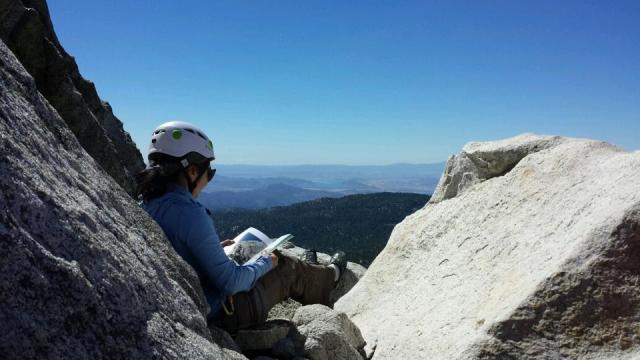
Failure. That word is so emotionally charged. Failure is something everyone experiences. Sometimes you’re lucky and no one’s around, but other times you walk into a glass door in a room full of hipsters. (Not me. Never.) Regardless, in the midst of that experience it can feel like your only company is doubt, shame, and sadness.
There are plenty of social media posts detailing the history of successful failures (J.K. Rowling and Walt Disney come to mind). Always accompanied by a slogan like “failure is a success, if we learn from it,” or “failure is proof that we tried. Now go try again.”
I have tried and failed at many things in my life. At one point, I tried to be a thespian; I failed. I failed, sometimes spectacularly, at relationships, writing, diets, seizing opportunities…You get the picture. For the most part, I have few regrets about my failures because I’ve ended up right where I am supposed to be in life. I truly believe that.
I do have one failure that haunts me. One of my deepest regrets (aside from not seeing the Nine Inch Nails farewell tour in London with a friend) is leaving the sport of rock climbing.
I have been asking myself: when it comes to failure in a sport, at what point do you pick yourself up, dust yourself off, and confront your failure? And at what point do you say this sport may not be for me?
I was introduced to the sport of rock climbing in law school. I loved it. The challenge climbing presented to my body. The mental puzzle of hand and foot holds. And the thrilling feeling of being just a little bit dangerous on the wall. Climbing presented me with endless opportunities for adventure. I went through a phase where I was on a wall every weekend. I even started dating a climber. See: failed relationships.
Climbing helped me gain back some confidence when I was going through a particularly rough time in my personal and professional life. Climbing and hiking helped pull me out of a year-long depression by forcing me to be present and surrounding me with all of the beauty the world has to offer.
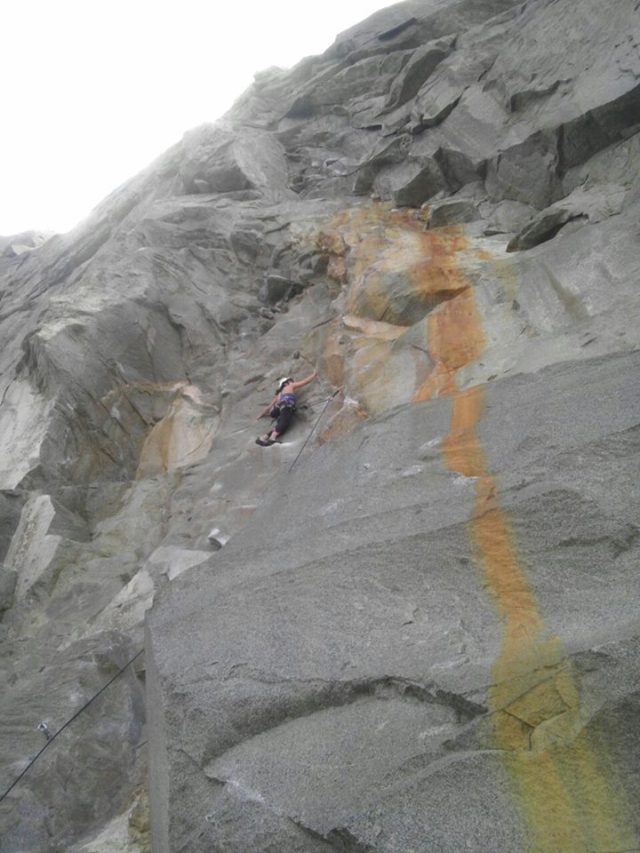
Depression is something that many people deal with, but it’s still a largely taboo subject. At the time, I tried many things to make myself “happy” and also sought professional help. Though I heavily considered medication, I was lucky that nature was the only prescription I needed.


I was finding my joy mostly in sport climbing. One day, I went on a trip to up my game to the next level: trad climbing. After hours of climbing, we realized we had lost the route and had no decent way to continue. Rather than risk finding our way ahead in the dark (or worse – spend the night on the rock), we decided to head back down the way we came. On the way down, I miscalculated my slack on a rappel and swung out and hit a tree – hitting my head. (This is why you should always wear a helmet, people.) Luckily I happened to be wearing mine that day and also luckily I kept the presence of mind not to let go of the rope.
After that day, even though the accident was small by comparison to ones I have personally witnessed (I once saw a guy knock four teeth out on a wall and drink a whiskey coke as triage), something changed. My confidence while climbing was shot. I tried multiple times to get back on the wall, but it was different. I was different. The routes that I once climbed with ease became Everest in my head. Even though I was completely safe with the rope taut, I felt like any moment I would be plummeting down to the floor. Failure is the word I saw in my head every time I said “lower me” without finishing a run. Eventually, I just stopped trying. I came up with convenient excuses like brunch, sleeping in, and the infamous “busy” trap.
It’s been nearly two years since my last real climbing outing. The question of when to confront yourself and when to leave a sport is a deeply personal one. I recently decided that this is a sport I want to fight to keep doing. I have never considered myself a spectator in life, but I’m afraid that leaving climbing the way that I did could start a trend which would lead me down a path to “lazy” and “comfortable”. A nice path, but not the one I want just yet.
I want to change the dialogue in my head. It’s not the world telling me that I failed at climbing, it’s my internal dialogue with myself that creates those feelings. I know the mental game is going to play a huge part in the effort to come back to climbing. My plan is to go back and learn everything from scratch in the gym with a positive dialogue. Luckily, I now live within a stone’s throw from some of the top of the line climbing gyms in the country. After I get comfortable again, I hope to try some new routes in Colorado…Outside.

 The Outdoorsy Lady